I’d like to start off by saying that I’m not a blogger. At least, not up until this point in my life. I do enjoy writing, but I can tell that this will be a challenge for me, getting started. This weeks’ task is to locate two examples of instructional design, in which the viewer is expected to have a learning outcome. I’m utilizing Pinterest, to assist me with examples, and help illustrate this better.
Graduate School has introduced a new complexity to my life, in the form of, lack of spare time. I find myself struggling to maintain a healthy diet and exercise routine, and the added stress has had a negative impact on my weight. These changes have made me more aware of the diets and trends that are popular at this time. I’m reading more and more about the keto diet, and utilizing this as one example of a form of instructional design. We’ve all seen the fad diets of yesterday, come and go over the years. From Weight Watchers, South Beach, Atkins, and many others. Todays diet trends are focused on the keto diet, which comes with both warnings and success stories.
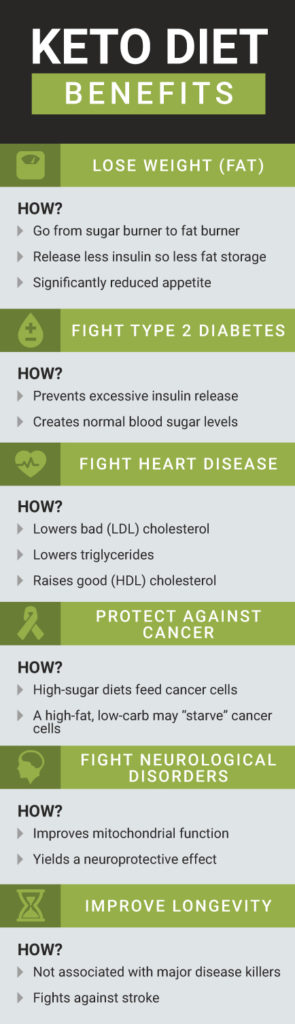

While pamphlets such as these are informative, they may not offer a full range of information about the keto diet, and whether or not its healthy for you. The role of Instructional Design is not only to inform, but also to cause change through the process of learning and encoding. This is where multimedia offers an advantage over static content such as these examples above. The learner is much more poised for learning the pros and cons of the keto diet, if it were presented with a video animation and illustrations of these benefits and side effects, where the viewer can hear and see what is happening in the body and make informed choices about their health.
Another instructional document that I found this week was one on the different learning styles. This one was interesting to me, because my academic path has been blended over the years. From hands on experience in an art studio learning to paint and draw, to countless hours in a computer lab learning the Adobe suite, to face to face classroom time , and also 100% online learning. I believe that there are some subject matters that require one on one leadership of a face to face classroom setting, in order to curate an intuition about that subject matter. While some subjects allow for more space your you to curate your own skills. The following infographic document helps outline several categories of observed learning styles.
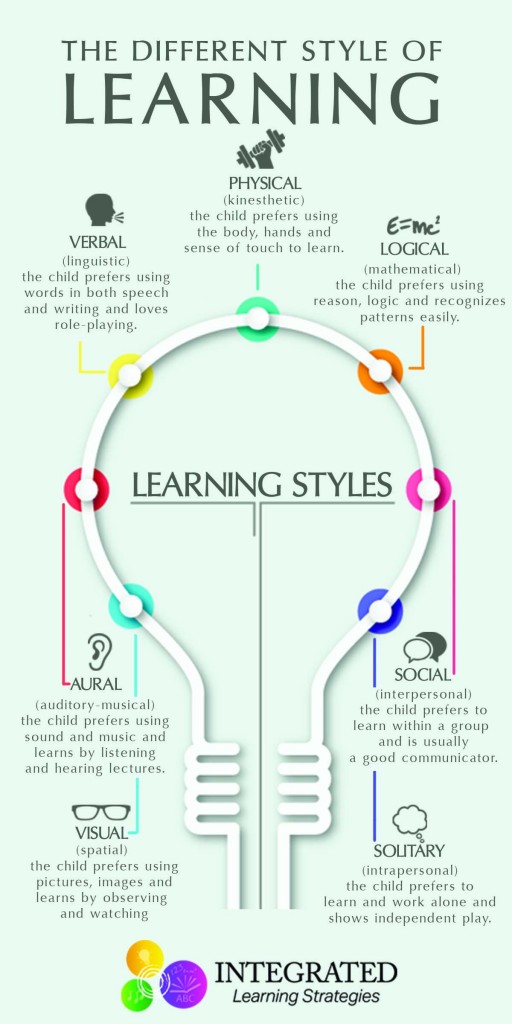
As a graphic designer, I can appreciate the value of infographics such as the one above. This type of information is valuable for categorization and identification, but not effective as a stand alone document for long term learning solutions. Instructional design takes each of these learning styles, from the above infographic, into account, and incorporates them into an instructional platform, where the combination of curriculum, participation, application, and evaluation are all designed into a desired learning outcome. I think this is a valuable observation for me to make early in my career, since I wear the hat of both graphic designer and instructional designer. It is important to not only address the aesthetic aspect, but also the cognitive aspect of the learning outcome for the viewer. Instructional design serves as an “umbrella” of teaching methods, which includes numerous tools that can be utilized to enhance cognitive retention, from multimedia, to instant messaging, and online meetings. By using today’s technology to its fullest, instructional design technology can tear down boundaries for students, and enable them to continue their education, outside of the formal classroom. It can encourage critical thinking and problem solving, through individual projects, or team collaborations. It can teach you to overcome language barriers, and make global connections, through online activities and gamification.
Instructional System Design (IDT) faces frequent criticism and confusion, not only from academics, but also from practitioners (Bichelmeyer, B.A.), who are struggling with both theory and value of the field. There has been a negative stigma from faculty and academic leaders of face-to-face classrooms, surrounding the topic of distance learning, for many years. Instructional Design (ID) is based upon the ADDIE (Analysis-Design-Development-Implementation-Evaluation) model, which has been criticized for not being a true representation of the ID structure. It turns out, ADDIE is not a model at all, but a conceptual framework (Bichelmeyer, B.A. 2005), which guides the design principles. The fact that a semantic label can lend itself towards devaluing the entire field of instructional design (ID), only emphasizes the importance of clear communication and attention to detail. As a future designer of content, I feel that this is a vital piece of information to hold onto as I work towards becoming an instructional designer. Trends in recent years, have shown a notable decline in classroom enrollments over recent years, while enrollment in online classes has continued to rise. Research recently conducted (Seaman, et al 2016), shows that one in four students in the United States, are taking at least some of their courses online. Although the field of instructional design has existed since the 1950’s, our metrics of the field is still in its infancy. We, as instructional designers, are an “interdisciplinary field that deals with identifying instructional problems and creating solutions to remedy those problems”, and we must insist on processes that “make real and sustained contributions to education in all its forms” (Bichelmeyer, B.A. 2005).
Allen, E., Seaman, J., Poulin, R., & Straut, T. (2016). Online report card: Tracking online education in the United States.Babson Survey Research Group and Quahog Research Group, LLC.
Bichelmeyer, B.A. (2005). The ADDIE Model: A Metaphor for the Lack of Clarity in the field of IDT.
 My Journey Through Instructional Design